> For the complete documentation index, see [llms.txt](https://bemind.gitbook.io/neural/llms.txt). Markdown versions of documentation pages are available by appending `.md` to page URLs; this page is available as [Markdown](https://bemind.gitbook.io/neural/neuralprophet/rukovodstva-po-funkciyam/razrezhennaya-avtoregressiya.md).
# Разреженная авторегрессия
В этом разделе мы используем NeuralProphet для работы с данными с разрешением в 5 минут (ежедневные температуры в Йосемити). Это продолжение учебного пособия `Учебник 4: Авторегрессия`. В то время как четвертый учебник охватывает авторегрессию в общем, настоящий блокнот сосредоточен на разреженности.
```python
if "google.colab" in str(get_ipython()):
# Удаляем предустановленные пакеты из Colab, чтобы избежать конфликтов
!pip uninstall -y torch notebook notebook_shim tensorflow tensorflow-datasets prophet torchaudio torchdata torchtext torchvision
!pip install git+https://github.com/ourownstory/neural_prophet.git@examples_cond_seas # может занять некоторое время
#!pip install neuralprophet # намного быстрее, но может не иметь последних обновлений/исправлений ошибок
import pandas as pd
from neuralprophet import NeuralProphet, set_log_level, df_utils
set_log_level("ERROR")
```
```python
data_location = "https://raw.githubusercontent.com/ourownstory/neuralprophet-data/main/datasets/"
df = pd.read_csv(data_location + "yosemite_temps.csv")
```
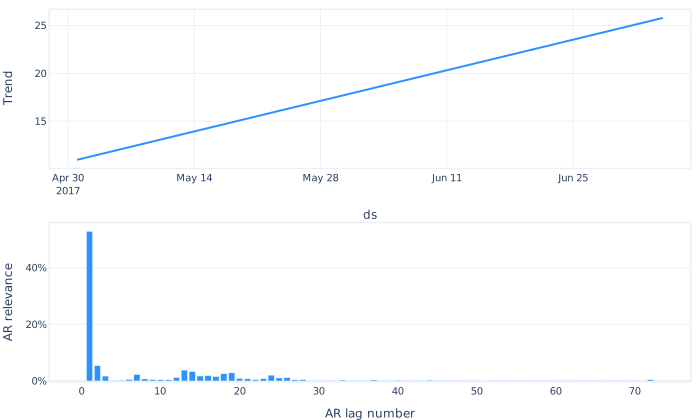
### Разрежение коэффициентов AR
Компонент авторегрессии в NeuralProphet определяется как AR-Net ([статья](https://arxiv.org/abs/1911.12436), [github](https://github.com/ourownstory/AR-Net)). Следовательно, мы можем установить значение `ar_reg` больше нуля, если хотим вызвать разреженность в коэффициентах AR.
Однако подгонка модели с несколькими компонентами и регуляризациями может быть более сложной и в некоторых случаях вам может понадобиться вручную управлять гиперпараметрами обучения.
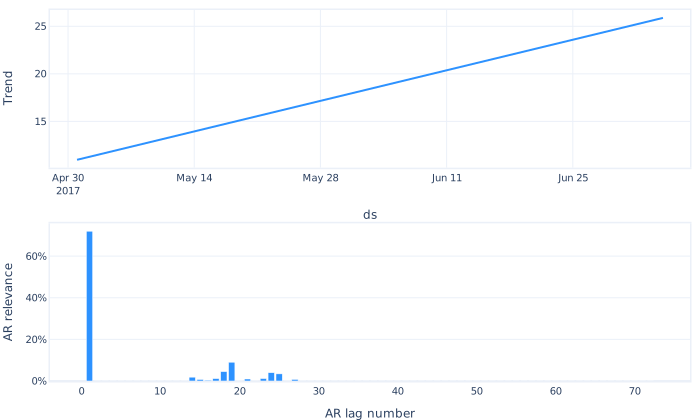
Мы начнем с установки регуляризации на 0.1
```python
m = NeuralProphet(
n_lags=6 * 12,
n_forecasts=3 * 12,
n_changepoints=0,
weekly_seasonality=False,
daily_seasonality=False,
learning_rate=0.01,
ar_reg=0.1,
)
m.set_plotting_backend("plotly-static")
metrics = m.fit(df, freq="5min") # validate_each_epoch=True, plot_live_loss=True
```
```python
m.plot_parameters()
```
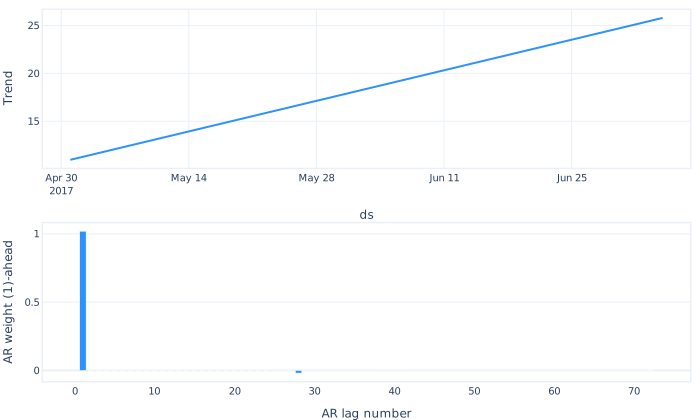
```python
m = m.highlight_nth_step_ahead_of_each_forecast(1)
m.plot_parameters()
```
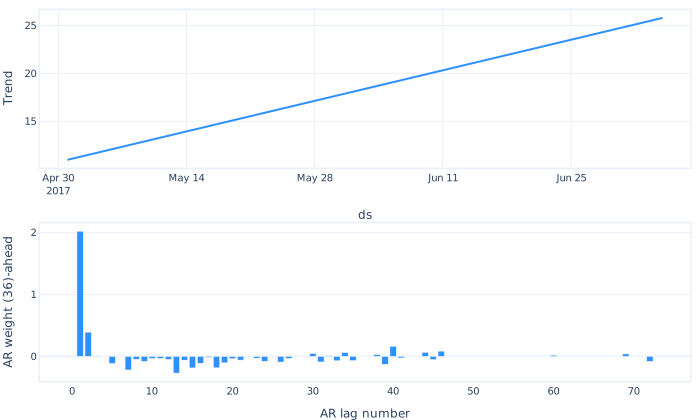
```python
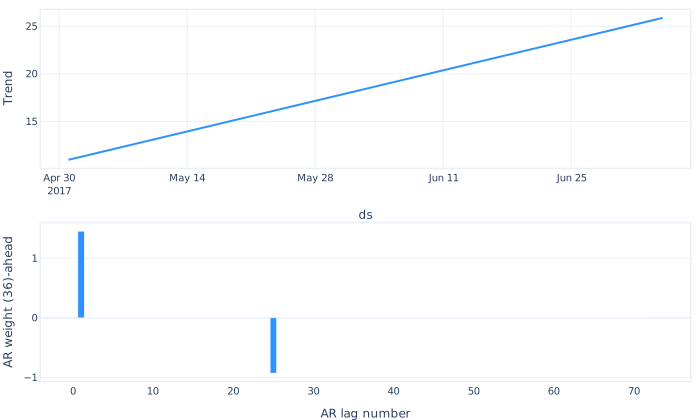
m = m.highlight_nth_step_ahead_of_each_forecast(36)
m.plot_parameters()
```
### Дальнейшее снижение ненулевых AR-коэффициентов
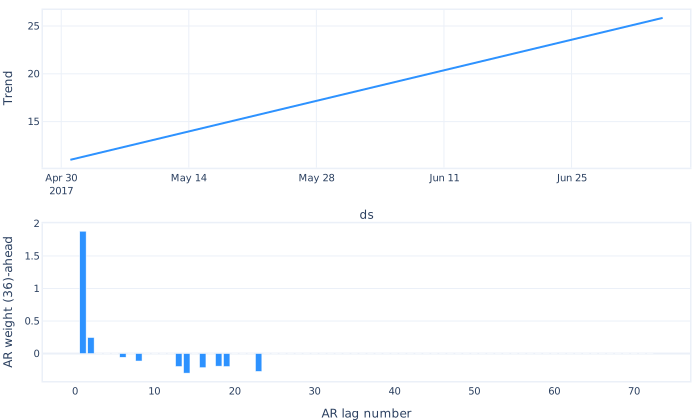
Повышая значение `ar_reg`, мы можем дополнительно уменьшить количество ненулевых весов. Здесь мы устанавливаем его равным 1.
```python
m = NeuralProphet(
n_lags=6 * 12,
n_forecasts=3 * 12,
n_changepoints=0,
daily_seasonality=False,
weekly_seasonality=False,
learning_rate=0.01,
ar_reg=1,
)
m.set_plotting_backend("plotly-static")
metrics = m.fit(df, freq="5min")
```
```python
m.plot_parameters()
```
```python
m = m.highlight_nth_step_ahead_of_each_forecast(1)
m.plot_parameters()
```
```python
m = m.highlight_nth_step_ahead_of_each_forecast(36)
m.plot_parameters()
```
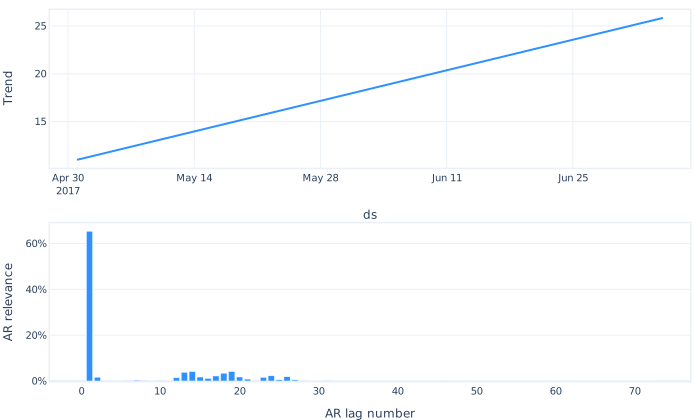
### Крайняя разреженность
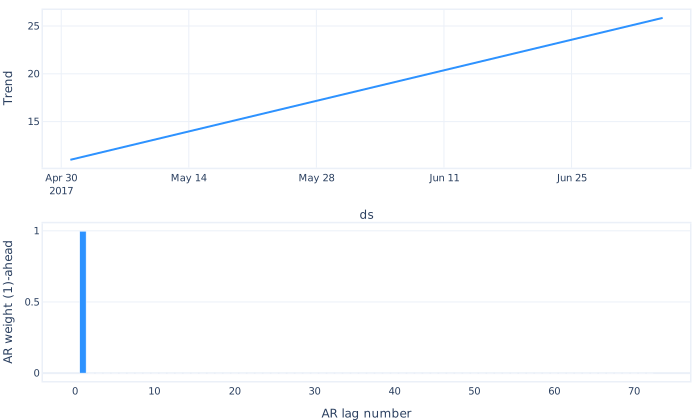
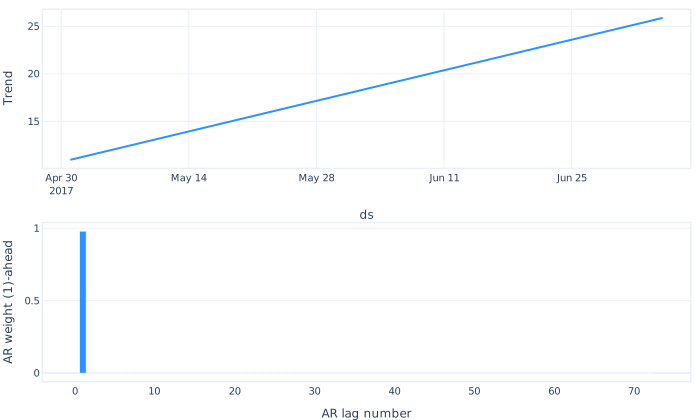
Чем выше мы устанавливаем `ar_reg`, тем меньше ненулевых весов учитывается моделью. Здесь мы устанавливаем его равным 10, что должно привести к одному ненулевому лагу.
{% hint style="danger" %}
**Примечание:** Крайние значения могут привести к нестабильности обучения.
{% endhint %}
```python
m = NeuralProphet(
n_lags=6 * 12,
n_forecasts=3 * 12,
n_changepoints=0,
daily_seasonality=False,
weekly_seasonality=False,
learning_rate=0.01,
ar_reg=10,
)
m.set_plotting_backend("plotly-static")
metrics = m.fit(df, freq="5min")
```
```python
m.plot_parameters()
```
```python
m = m.highlight_nth_step_ahead_of_each_forecast(1)
m.plot_parameters()
```
```python
m = m.highlight_nth_step_ahead_of_each_forecast(36)
m.plot_parameters()
```